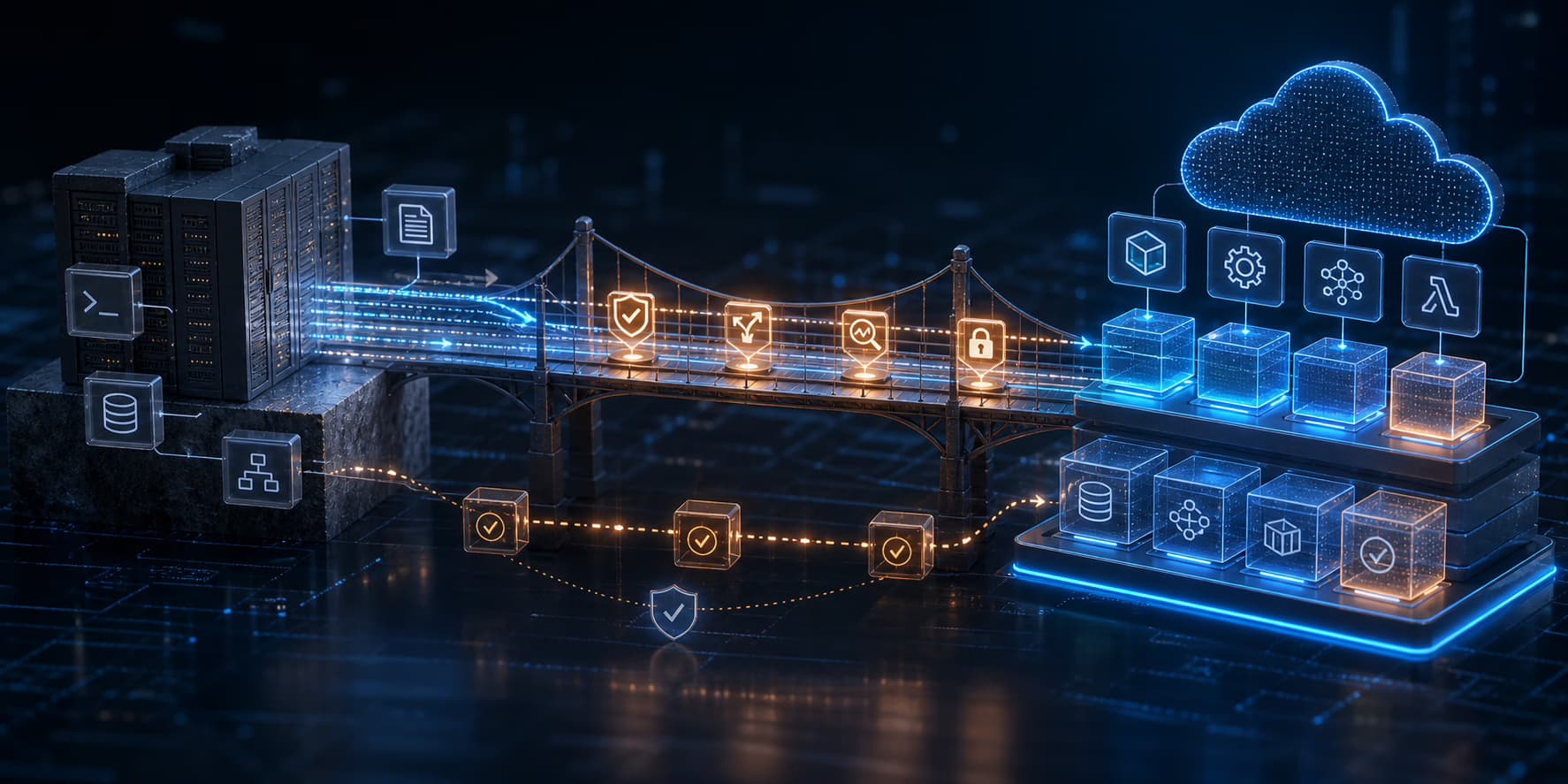
A phased modernization approach for replacing fragile systems, improving agility, and protecting the business during transition.
Legacy systems are business systems
Legacy technology often carries critical operations. It may be difficult to change, expensive to maintain, and hard to integrate, but it also contains business rules, customer history, and operational habits that cannot simply disappear.
Successful modernization respects this reality. The goal is to improve agility, resilience, and cost structure without creating disruption that damages the business.
Avoid the big-bang trap
Replacing a large system all at once can look clean on paper and become dangerous in practice. Requirements shift, hidden dependencies appear, data quality issues surface, and teams discover that the old system handled exceptions no one documented.
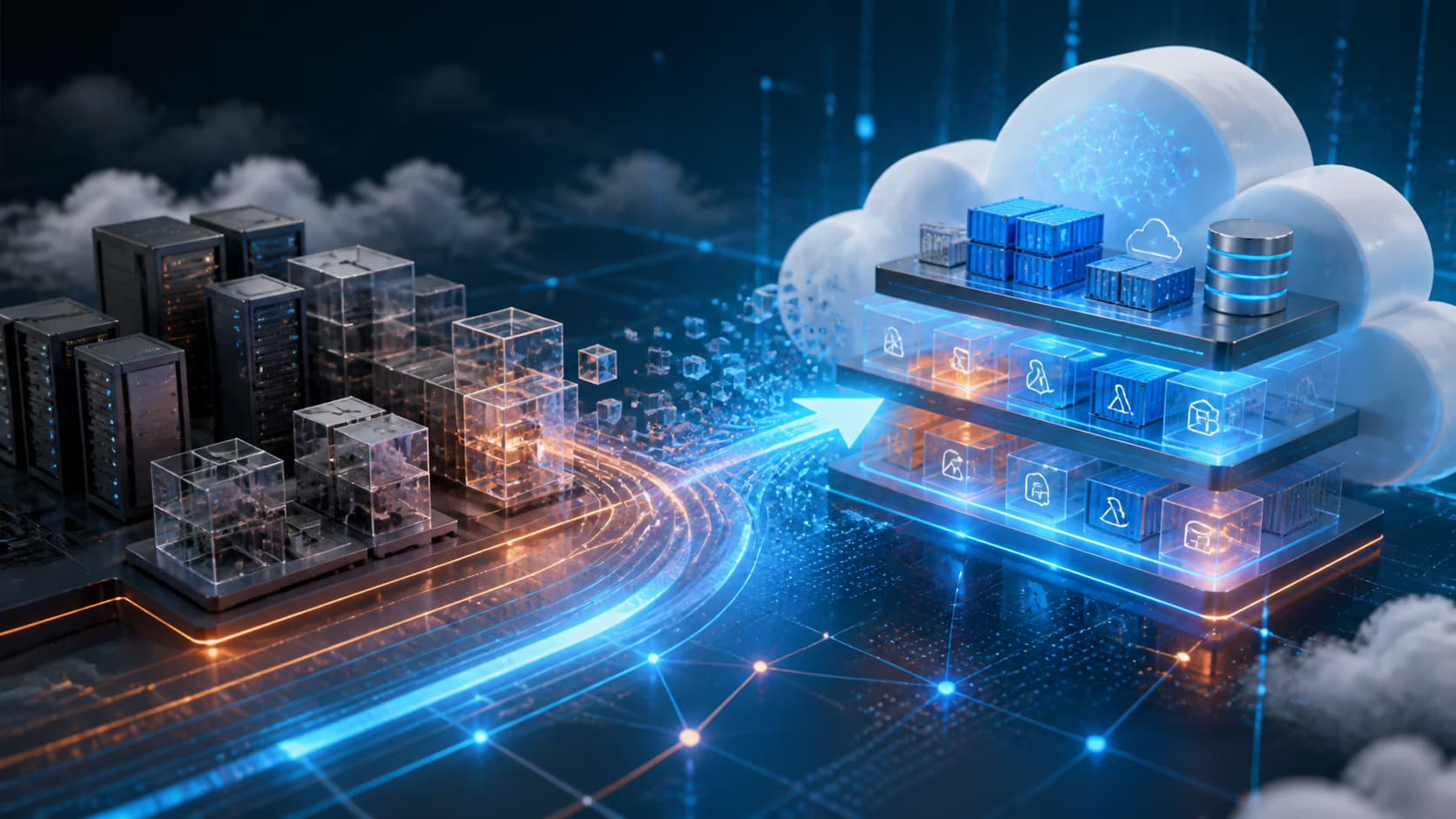
Incremental modernization patterns reduce this risk. Teams can wrap legacy systems with APIs, extract capabilities one by one, migrate data in phases, and run old and new systems in parallel until confidence is high.
- Strangler patterns for gradual capability replacement.
- API layers that reduce direct dependency on legacy interfaces.
- Data migration checkpoints with reconciliation and rollback plans.
- Pilot releases for specific teams, regions, or workflows.
Modernize the operating model too
A new architecture will not deliver value if teams keep old release habits. Modernization should include CI/CD, automated testing, observability, security reviews, documentation, and clearer ownership.
This operating model helps the organization keep improving after the initial migration. Without it, the modern platform can slowly become tomorrow's legacy system.
Communicate change in business terms
Modernization affects users, leaders, customers, and support teams. Technical teams need to explain progress in terms of faster workflows, reduced incidents, lower manual effort, better reporting, and improved customer experience.
When stakeholders understand the value and the transition plan, modernization becomes a shared business program instead of a risky engineering project.
Final Thought
Legacy modernization is an act of careful transformation. The organizations that do it well move steadily, measure value, and protect the business while building the future platform.