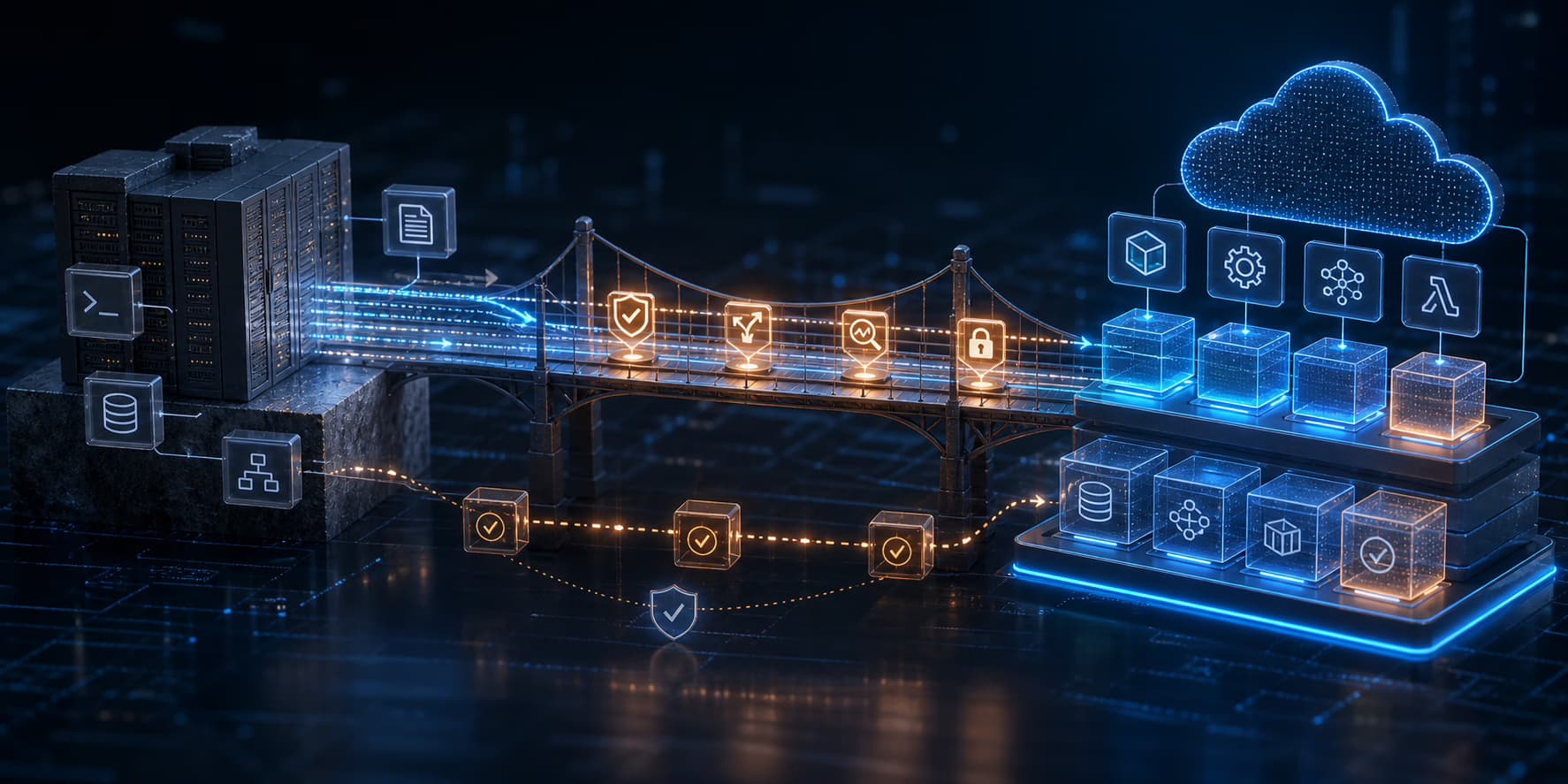

Learn how modern cloud architectures improve agility, reduce operational complexity, and support long-term digital transformation goals.
Modernization is more than moving workloads
A lift-and-shift migration can reduce data center dependency, but it rarely delivers the full value of cloud. Real modernization improves release speed, resilience, cost visibility, security posture, and developer productivity. That requires changes across architecture, operations, and team behavior.
The best programs begin with a portfolio view. Which applications are strategic? Which systems are expensive to change? Which services block product delivery? This clarity helps leaders choose where to rehost, replatform, refactor, replace, or retire.
Build a migration path around value
Cloud programs often stall when the roadmap is organized only by infrastructure dependency. A stronger approach combines technical sequencing with business value. Start with workloads that unlock faster product releases, improve customer experience, or remove expensive manual operations.
This creates momentum. Teams see the benefit early, stakeholders understand the investment, and the migration program becomes a growth enabler instead of a background IT activity.
- Assess applications by complexity, cost, risk, and business impact.
- Create repeatable landing zones and deployment patterns.
- Move in phases with measurable improvements after each release.
Design for reliability and cost from day one
Modern cloud systems can scale quickly, but unmanaged scale becomes unmanaged spend. Teams need clear cost ownership, observability, automated policies, and architectural guardrails. FinOps should be built into the operating model rather than added after invoices become painful.
Reliability also needs design attention. Multi-environment pipelines, rollback strategies, health checks, incident workflows, and service-level objectives help teams move quickly without treating production as a guessing game.
Platform engineering makes modernization stick
A modern cloud platform should make the right path the easy path. Reusable templates, secure defaults, self-service deployment, shared observability, and standard integration patterns reduce friction for product teams.
When the platform becomes a product for internal engineering teams, cloud modernization keeps paying dividends. Developers spend less time fighting infrastructure and more time solving customer and business problems.
Final Thought
Cloud modernization is not a destination. It is an operating capability that lets the organization adapt, scale, and innovate without rebuilding its foundation every time growth arrives.