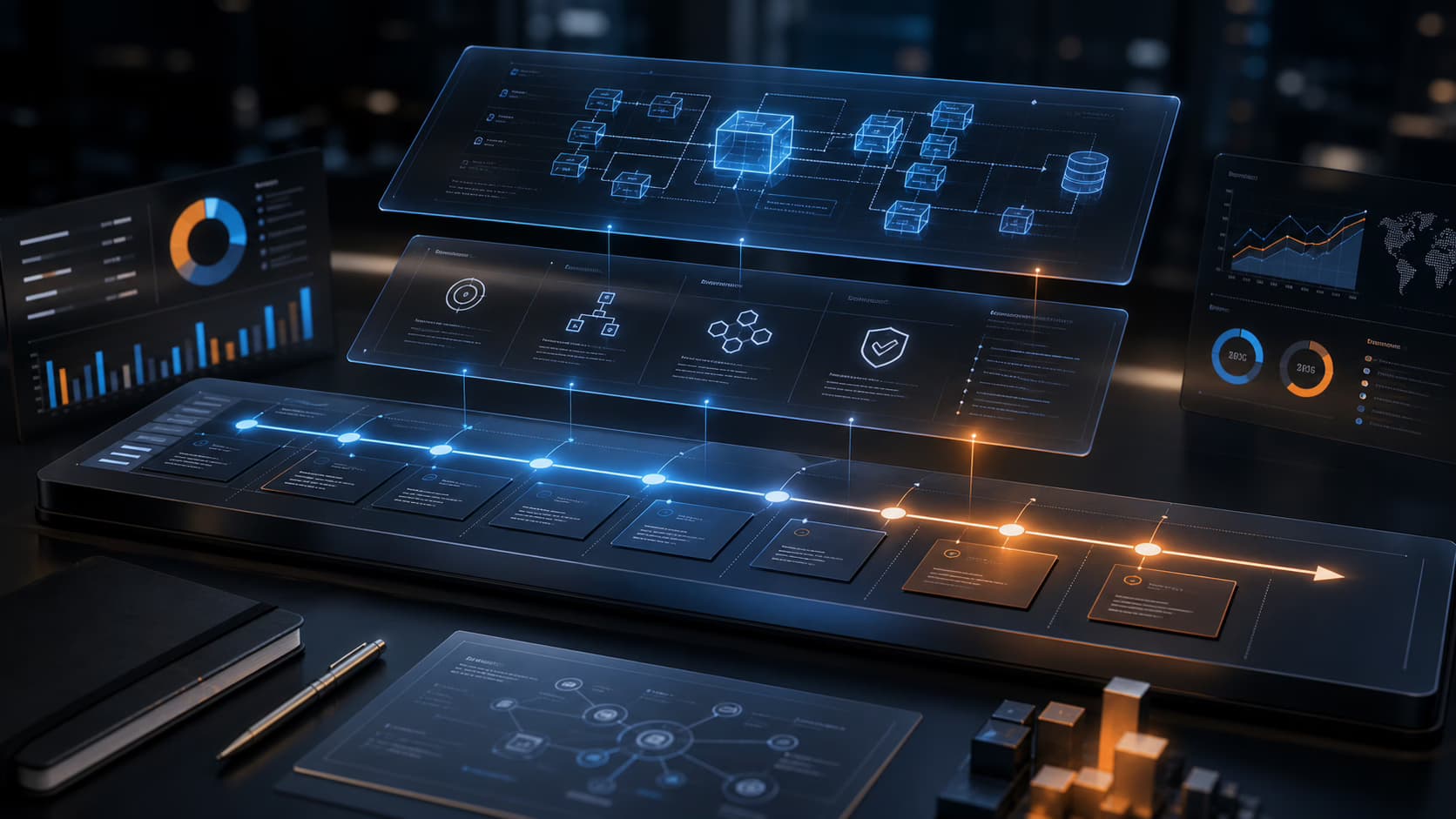
Explore why tailored software solutions continue to outperform off-the-shelf tools for enterprises with unique workflows and growth ambitions.
AI does not erase business specificity
Off-the-shelf software can be excellent for standard processes. The challenge is that many high-value workflows are not standard. They carry years of operational knowledge, exceptions, compliance needs, customer expectations, and data relationships that generic products cannot fully understand.
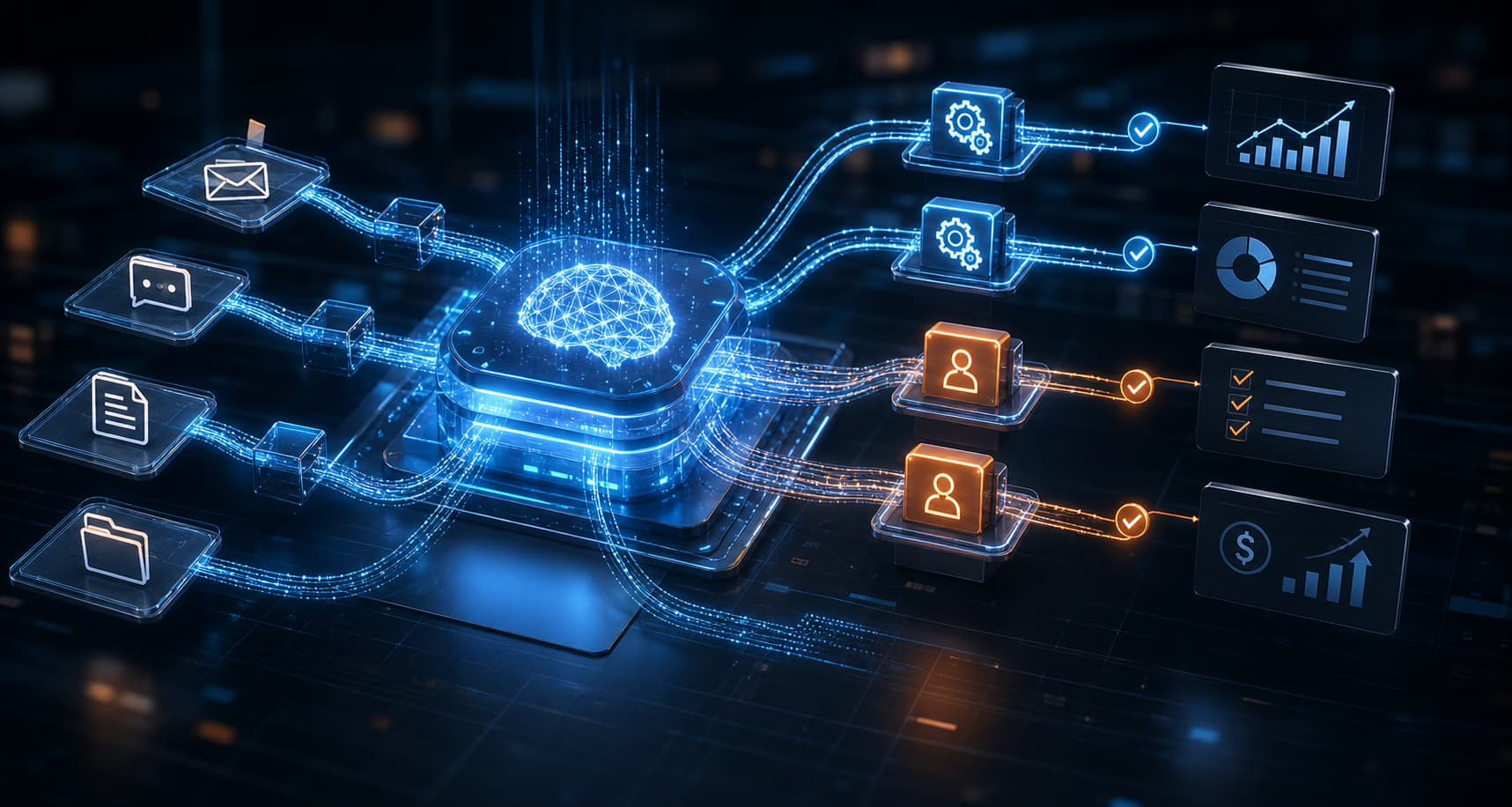
AI makes this more visible. A generic AI layer can draft, summarize, and answer, but it becomes far more valuable when it is connected to the organization's actual workflows, policies, systems, and decision history.
Custom systems turn AI into business context
The real advantage comes when AI is embedded in the places where work happens. A procurement platform can recommend vendors based on internal approval rules. A support system can summarize account history and propose next actions. A field operations app can detect risk before a service visit is missed.
These experiences depend on custom logic, domain models, and integrations. The AI capability may use common models, but the business value comes from how those models are orchestrated inside a tailored product.
Integration is where differentiation lives
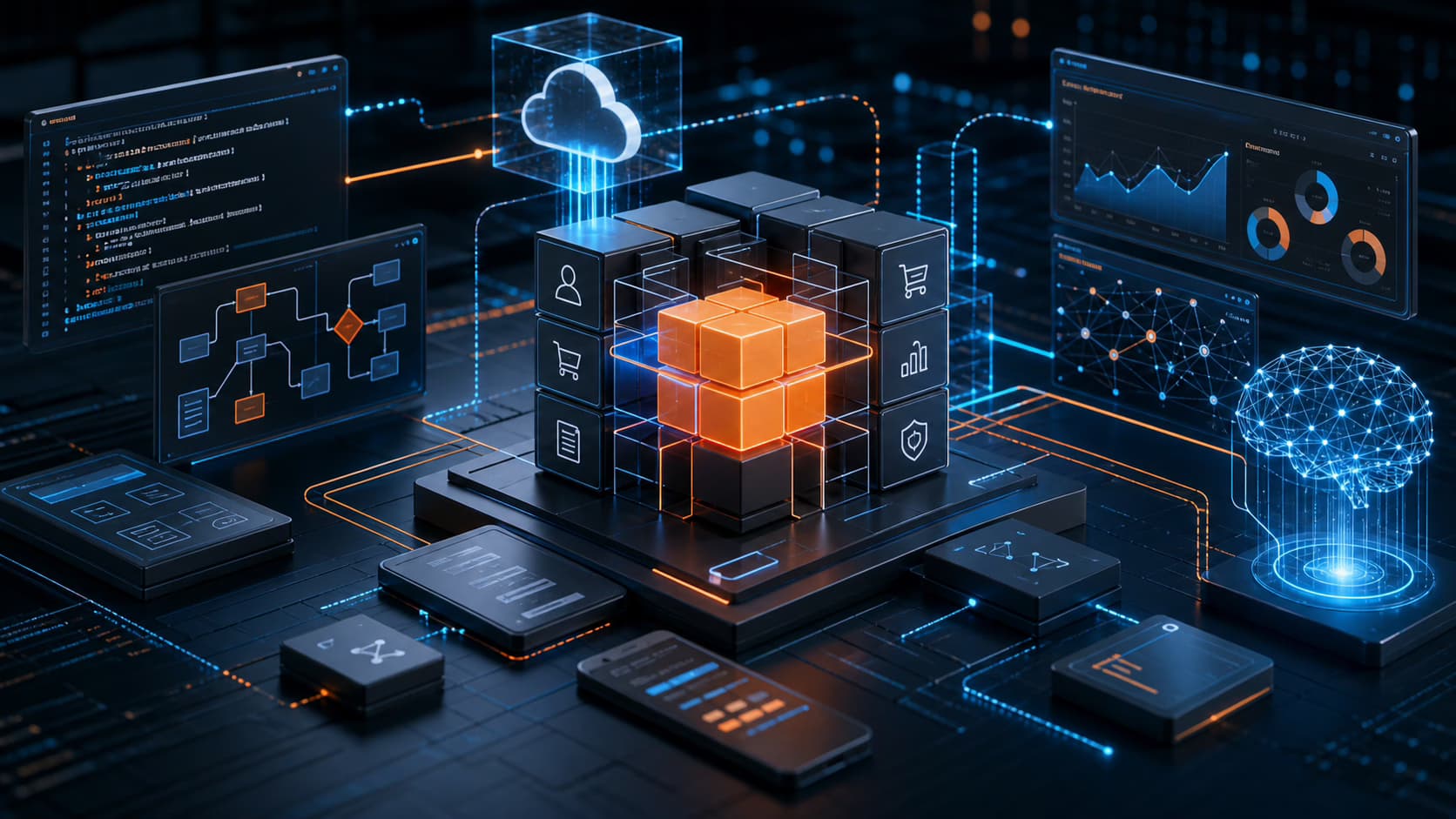
Most enterprises already run a mix of ERP, CRM, data warehouses, legacy portals, spreadsheets, document repositories, and specialist tools. Custom software can connect these systems into a cleaner workflow while preserving the investments that still work.
This integration layer becomes a strategic asset. It gives teams a single operating surface, reduces duplicate entry, improves data quality, and creates the foundation for automation and analytics.
- Connect legacy and modern applications without disrupting the business.
- Create workflow-specific interfaces for different teams.
- Apply governance, permissions, and audit trails where they are needed.
The right question is not build or buy
The strongest technology strategies combine both. Buy commodity capabilities when they are mature and cost-effective. Build the systems that represent operating advantage, customer differentiation, or deep workflow complexity.
AI accelerates this hybrid model. Teams can build smarter custom software faster, integrate commercial tools more effectively, and continuously evolve the product as the business learns.
Final Thought
Custom software still wins because the business itself is custom. AI raises the ceiling, but the systems that capture your operating advantage still need to be intentionally designed and engineered.